High school mathematics presents students with various challenges, and two of the most significant subjects they encounter are algebra and geometry. Both subjects are foundational to higher-level math and critical for standardized tests like the SAT and ACT. However, students often find themselves wondering which of these subjects is harder and more intimidating. This article will explore the differences between algebra and geometry, the challenges each presents, and how students can navigate these subjects successfully.
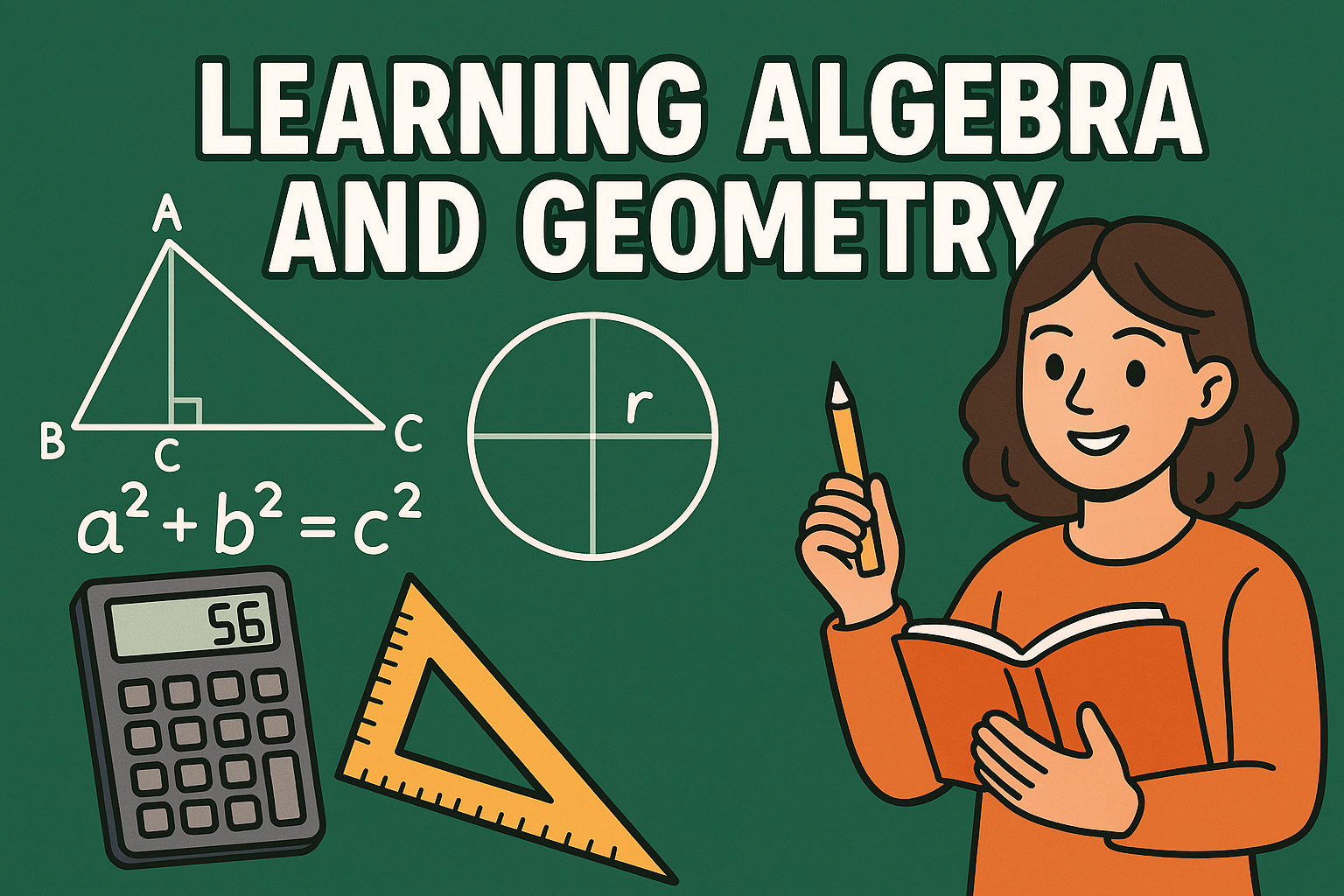
Understanding Algebra and Geometry
What is Algebra?
Algebra is a branch of mathematics that deals with symbols and the rules for manipulating those symbols. It involves solving equations, working with variables, and understanding functions. Key concepts in algebra include:
- Variables: Symbols (often letters) that represent unknown values.
- Expressions: Combinations of numbers, variables, and operators (like addition and multiplication).
- Equations: Mathematical statements that assert the equality of two expressions.
- Functions: Relationships between sets of numbers where each input has a single output.
Algebra serves as a foundational skill for many advanced math topics, including calculus and statistics. It often involves abstract reasoning and problem-solving techniques.
What is Geometry?
Geometry, on the other hand, is the branch of mathematics concerned with the properties and relationships of points, lines, surfaces, and shapes. It focuses on spatial reasoning and visualization. Key concepts in geometry include:
- Points and Lines: The basics of geometric figures.
- Angles: The measure of rotation between two lines.
- Shapes: Two-dimensional figures (like triangles and circles) and three-dimensional figures (like cubes and spheres).
- Theorems: Established mathematical statements that describe relationships in geometry, such as the Pythagorean theorem.
Geometry often requires students to visualize problems and apply logical reasoning to prove statements about shapes and their properties.
Comparing the Challenges of Algebra and Geometry
Common Challenges in Algebra
- Abstract Concepts: Algebra relies heavily on abstract thinking. Students must understand how to manipulate symbols and variables without concrete examples.
- Equation Solving: Many students struggle with different methods of solving equations, including linear equations, quadratic equations, and systems of equations.
- Functions and Graphing: Understanding functions and their graphs can be challenging for students, especially when dealing with transformations and interpretations of graphs.
- Word Problems: Translating word problems into algebraic expressions or equations can be a significant hurdle for many students.
Common Challenges in Geometry
- Spatial Visualization: Geometry requires strong spatial reasoning skills. Some students may struggle to visualize shapes in two or three dimensions.
- Proofs: Writing geometric proofs can be particularly daunting, as it requires logical reasoning and the ability to connect different concepts.
- Theorems and Postulates: Memorizing various geometric theorems and postulates can be overwhelming, and students must know how to apply them to solve problems.
- Real-World Applications: Understanding how geometry applies to real-world situations can be challenging and may require imaginative thinking.
Which Subject is Harder?
Determining whether algebra or geometry is harder depends on the individual student. Here are some factors to consider:
Learning Style
- Visual Learners: Students who learn best through visual aids may find geometry easier, as it relies on diagrams and spatial reasoning.
- Logical Thinkers: Students who excel in abstract reasoning and logical problem-solving may find algebra more intuitive.
Prior Knowledge
- Students who have a strong foundation in basic arithmetic may find algebra easier, while those with a knack for visualizing shapes may excel in geometry.
Interest Level
- A student’s interest in mathematics can significantly affect their perception of difficulty. Students who enjoy real-world applications may prefer geometry, while those who enjoy abstract thinking may favor algebra.
Teacher Influence
- The teaching style and effectiveness of the instructor can impact a student’s experience in both subjects. Engaging teaching can make either subject more approachable.
Strategies for Success in Algebra and Geometry
Tips for Excelling in Algebra
- Practice Regularly: Consistent practice helps reinforce concepts and improves problem-solving skills. Use algebra workbooks and online resources for additional practice.
- Understand Concepts: Focus on understanding the “why” behind algebraic rules instead of just memorizing procedures. This deep understanding will aid in solving complex problems.
- Use Online Tools: Leverage online resources like Khan Academy or math tutoring apps to supplement learning and provide additional explanations.
- Form Study Groups: Collaborate with peers to discuss challenging problems and share different solving strategies.
Tips for Excelling in Geometry
- Draw Diagrams: Visualizing problems is key in geometry. Always draw diagrams to help understand the relationships between shapes.
- Memorize Key Theorems: Create flashcards for important theorems and postulates. Knowing these can greatly assist in solving problems and writing proofs.
- Practice Proof Writing: Work on writing geometric proofs regularly. Familiarize yourself with different proof techniques, such as direct proof, indirect proof, and proof by contradiction.
- Apply Geometry to Real Life: Look for geometric shapes and concepts in everyday life. Understanding their practical applications can make learning more engaging.
The Role of Tutoring in Mastering Algebra and Geometry
For students struggling with either algebra or geometry, tutoring can provide the necessary support to improve understanding and performance.
Benefits of Tutoring
- Personalized Attention: Tutors can tailor lessons to meet the specific needs of each student, focusing on areas that require improvement.
- Flexible Learning Pace: Tutoring allows students to learn at their own pace, ensuring they fully grasp concepts before moving on.
- Targeted Practice: Tutors can provide focused practice on particular topics, such as quadratic equations in algebra or the properties of triangles in geometry.
- Building Confidence: Regular tutoring sessions can help students build confidence in their math skills, reducing anxiety associated with tests and assignments.
Choosing the Right Tutor
When selecting a tutor, consider the following:
- Qualifications: Look for tutors with experience in high school mathematics and a strong understanding of both algebra and geometry.
- Teaching Style: Ensure the tutor’s teaching style aligns with the student’s learning preferences.
- Availability: Check that the tutor’s schedule accommodates the student’s availability for regular sessions.
Finding Balance in Math
Navigating the challenges of algebra and geometry can be daunting for high school students. By understanding the differences between the two subjects and the unique challenges they present, students can make informed decisions about how to approach their studies. With the right strategies, resources, and support, including tutoring, students can excel in both algebra and geometry, laying a solid foundation for future mathematical endeavors.
Ready to Enhance Your Math Skills?
At MST Tutoring, we offer personalized tutoring programs tailored to meet your unique learning needs in both algebra and geometry. Our experienced tutors are here to help you overcome challenges and achieve your academic goals. Don’t let math hold you back—unlock your potential and start your journey to success today!
You might find interesting:
- Unlocking Your Potential: How Does Math Tutoring Improve SAT Math Scores?
- Achieving Success: What’s the Best Age to Start High School Math Tutoring?